How fixed exchange rates work in stablecoin payments
What a fixed exchange rate means in a crypto payment: why prices are set in dollars, what is fixed for one hour, how it differs for stablecoins and volatile coins, and what to do with late payments.
A customer who pays in crypto needs to know exactly how much to send, and a merchant needs to know exactly how much they will receive. The exchange rate sits between the two. This guide explains what is fixed in a Qvard payment, why it is simple for dollar stablecoins and more important for other coins, and how to handle the payment that arrives after the rate window.
You price in dollars, the customer pays the equivalent
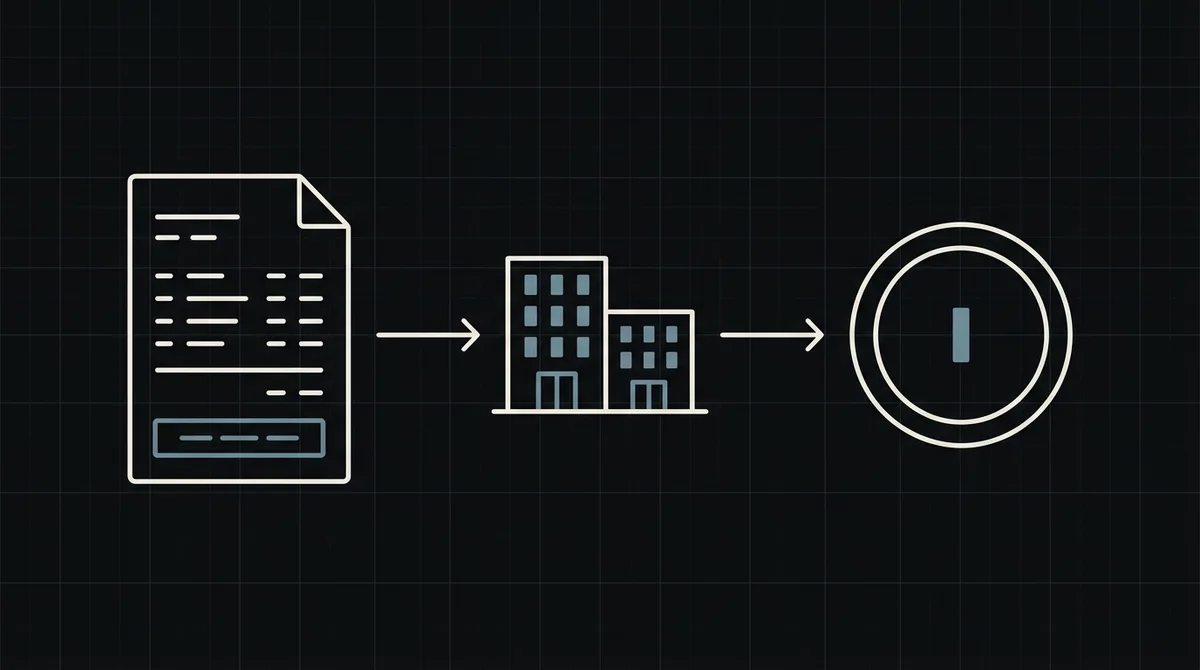
With Qvard you set the price in US dollars. The payment is created in dollars (price in the request), and the customer pays the equivalent in the asset and network they choose on the payment page.
That keeps your shop's logic in one currency: the order has one dollar value, whatever the customer pays with. It also gives the customer a clear number: "this order is 49 dollars, and in USDT on TRON that is this many tokens".
What is fixed, and for how long
The exchange rate on the payment page is fixed for one hour. In that hour the amount the customer is asked to send does not change, even if the market moves. The customer can read the exact amount, open the wallet, paste it and send it without the figure shifting under them.
This is what makes the payment page usable. A crypto payment is not instant for the customer: they need to open a wallet, check the network and confirm. A rate that moved while they did it would turn every payment into an underpayment or an overpayment.
Stablecoins versus volatile coins
- Dollar stablecoins such as USDT and USDC are pegged to the US dollar, so the conversion is close to one to one. The fixed rate is mostly a convenience, and the practical risk of a price swing during payment is very small.
- Volatile assets such as Bitcoin, Ethereum, Litecoin, BNB or TRON move against the dollar all the time. Here the fixed rate does real work: it freezes the number for the hour, so you are paid the dollar value you priced.
Qvard supports both kinds among its assets; see the supported coins. For a business that wants predictable dollar revenue, a stablecoin is the simpler choice; the fixed rate keeps the other coins workable too.
One caution: a stablecoin can trade slightly away from a dollar in stress. For a payment that completes in minutes this is a small risk; for a balance you hold for weeks it is more than nothing, and worth a plan (see USDT vs USDC for business payments).
What the fixed rate does not cover
Fixing the rate protects the payment. It does not protect everything around it:
- Short payments. If the customer sends less than the required amount, for example because an exchange took a withdrawal fee, the payment gets the
partialstatus and no completion webhook is sent. That is not a rate problem; see how to handle USDT underpayments. - Late payments. A payment that arrives long after the hour is outside the rate window. Treat it as a support case, decide your rule in advance, and confirm with Qvard how such a payment is handled for your project.
- Balances you hold. Once the payment is complete the funds are yours, in the coin the customer used. If that coin is volatile, its dollar value can change before you withdraw or convert.
What to tell customers, and how to design around it
- Tell customers the price is in dollars and that the exact amount in their coin is shown on the payment page and valid for an hour.
- Tell them to pay promptly: open the page when they are ready to send, not hours before.
- For an order that may take longer, create the payment when the customer is ready to pay, not when the cart is built, so the hour starts when it is needed.
- For a customer who missed the window, create a fresh payment for the order with a new link instead of reusing an old page. See how redirectUrl works in crypto checkout.
The API call that creates the payment is described in crypto payment API for developers.
FAQ
How long is the exchange rate fixed?
For one hour, on the payment page. In that time the amount the customer must send does not change.
In which currency do I set the price?
In US dollars. The customer pays the equivalent in the asset and network they choose.
Does the fixed rate matter for USDT and USDC?
Less than for other coins, because dollar stablecoins are pegged to the dollar. It still keeps the amount constant while the customer pays.
What if the customer pays after the hour?
Treat it as a support case, decide your rule in advance and confirm with Qvard how such a payment is handled. Where possible, create a new payment for the order.